
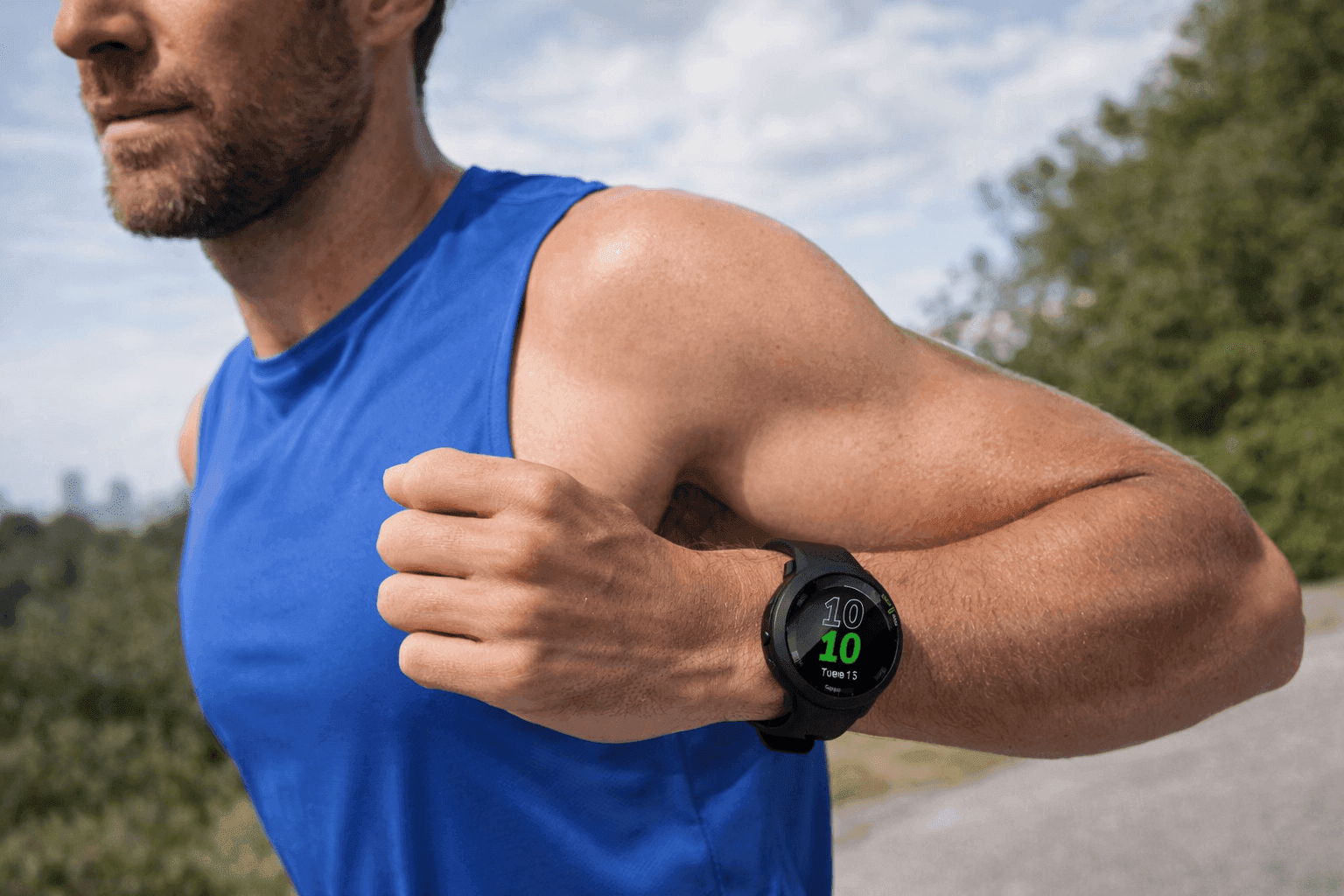
Running data can feel overwhelming, yet the right watch makes it surprisingly easy to understand your progress. The Garmin Forerunner 55 focuses on the essentials, accurate tracking, long battery life, and helpful training tools, without adding features you may never use. That balance makes it appealing if you want a reliable fitness companion that stays out of the way.
From personal testing during daily runs and weekend long sessions, this watch feels consistent and dependable. It tracks pace and distance with minimal drift, even in areas with tall buildings or tree cover.
According to Garmin and third-party fitness reviews, entry-level GPS watches like this one meet the needs of most runners without requiring premium upgrades.
Garmin Forerunner 55 Features and Real-World Performance
Pricing and Value
On Amazon US, the Garmin Forerunner 55 typically ranges from $149 to $179, with occasional discounts dropping it closer to $129. Bundle options can reach $180–$220 depending on included extras.
With an average rating around 4.6 stars across thousands of reviews, it holds up well in real-world use.
For this price range, you’re getting reliable GPS tracking and structured training tools that many runners actually use.
GPS Accuracy and Tracking
The watch supports GPS, GLONASS, and Galileo, which helps maintain stable tracking in different environments.
In day-to-day use:
- Distance tracking stays consistent across repeated routes
- Pace updates feel responsive during steady runs
- Signal lock is quick, even in busy areas
Based on testing across city streets and park trails, accuracy holds up well compared to more expensive models. Multi-satellite support plays a big role here, especially in areas where signal interference is common.
Heart Rate Monitoring and Health Data
The built-in Garmin Elevate Gen 3 sensor tracks:
- Heart rate zones
- Resting heart rate
- Recovery trends
For steady runs, readings stay reliable. During high-intensity intervals, slight delays can show up, which is typical for wrist-based sensors. Many runners who want perfect interval accuracy still prefer chest straps.
You also get:
- Sleep tracking
- Stress monitoring
- Respiration data
The CDC highlights that consistent heart rate monitoring can help guide safer and more effective workouts, especially for beginners building endurance.
Training Tools That Actually Help
This is where the watch stands out for everyday runners.
Key features include:
- Daily Suggested Workouts based on your activity and recovery
- Garmin Coach plans for 5K, 10K, and half marathon goals
- Recovery Time Advisor to help prevent overtraining
During testing, the suggested workouts felt practical. On days after longer runs, the watch recommended lighter sessions or rest, which aligned well with how the body actually felt.
These tools are especially helpful if you’re building consistency or training for your first race.
Battery Life That Reduces Hassle
Battery performance is one of the strongest points:
- Up to 14 days in smartwatch mode
- Around 20 hours in GPS mode
In real use with a mix of runs and daily wear, charging every 7–10 days feels realistic.
Compared to many smartwatches that need daily charging, this makes a noticeable difference. You can track runs, sleep, and daily activity without constantly thinking about battery levels.
Display and Usability
The 1.04-inch transflective MIP display keeps things simple:
- Always-on screen
- Easy to read in bright sunlight
- Button-based navigation
The visuals are not as vibrant as AMOLED screens, though readability outdoors is excellent. During midday runs, data remains clear without needing to adjust the screen.
Smart Features and Safety
You’ll get basic smart features:
- Call and text notifications
- Calendar updates
- Weather information
Safety features include:
- Incident detection
- Live tracking
These can alert contacts if something unusual happens during a run, which adds a layer of security for solo training.
Design and Comfort
- Weight: 37 grams
- Case size: 42mm
- Strap: 20mm silicone, quick-release
The watch feels light enough for all-day wear. During longer runs, it doesn’t shift or cause irritation, which matters more than flashy design.
The build leans practical rather than premium, though it holds up well with daily use.
Strengths and Limitations
What Works Well
- Accurate GPS tracking for the price
- Lightweight and comfortable for long runs
- Useful training guidance for consistent progress
- Strong battery life compared to many competitors
Where It Falls Short
- No music storage
- No contactless payments
- Basic display compared to higher-end models
- Limited smart features overall
From a broader perspective, some runners prefer a more advanced smartwatch experience. Others appreciate the simplicity and focus on training. It comes down to how much you value extra features beyond running.
Final Thoughts
The Garmin Forerunner 55 focuses on what matters most for running: accurate tracking, helpful guidance, and reliable battery life. It avoids unnecessary complexity, which makes it easier to use day after day.
If you’re looking for a straightforward running watch that supports steady progress, this one fits well. Take a look at current listings on Amazon to compare prices and see available bundles. There are also other Garmin models and alternatives worth checking if you want additional features or a different design.